
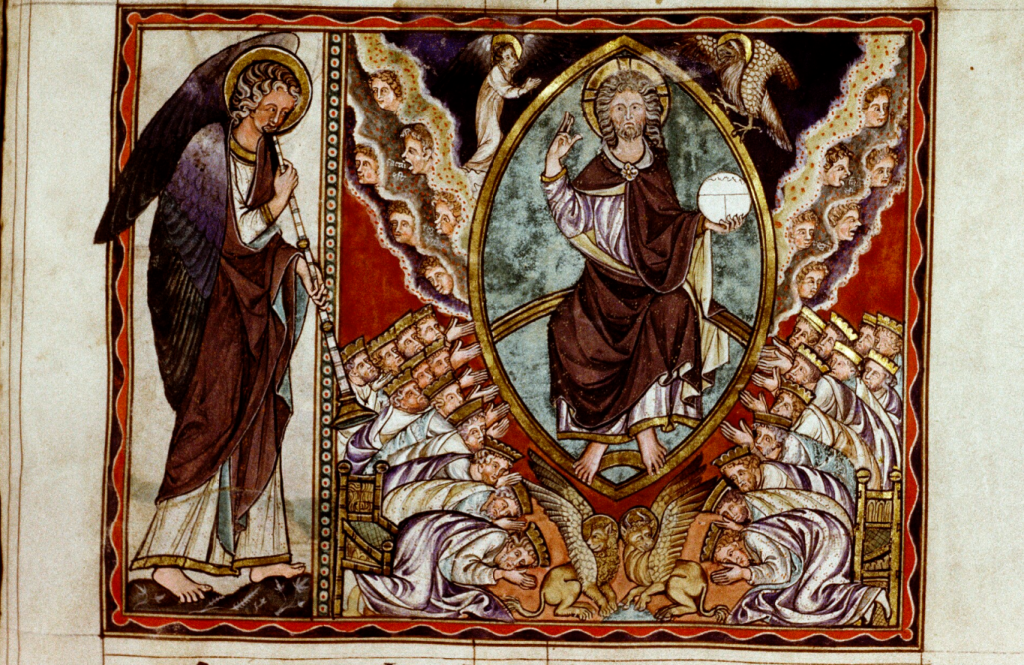
For the second post in this series, we look into one of the most prominent groups of angels in Coptic magical texts, namely the Twenty-Four Presbyters. Their name, from the Greek presbuteros, means “priest”. In the Christian Egyptian and affiliated traditions (such as the Ethiopian and Nubian Churches), they were understood as the angelic priests who carry out the divine liturgy in the Church of the Firstborn in heaven. In the Bible, they first appear in the vision of heaven from Revelation 4.4–11:
Surrounding the throne were twenty-four other thrones, and seated on them were twenty-four presbyters. They were dressed in white and had crowns of gold on their heads … [they] fall down before him who sits on the throne and worship him who lives for ever and ever. They lay their crowns before the throne and say: “You are worthy, our Lord and God, to receive glory and honor and power, for you created all things, and by your will they existed and were created and have their being”.
Because of their place in heaven, surrounding and worshiping God, the Twenty-Four Presbyters became very important in early Christian traditions, for example, in literary works, liturgical hymns and prayers, and wall paintings. Two apocryphal homilies dedicated to them survive in Coptic. One is attributed to Proclus of Constantinople and was supposedly written for the commemoration of the Twenty-Four Presbyters on the 24th of the month of Hathor (20 November). The second work is On the Honour of the Twenty-Four Presbyters, attributed to Cyril of Jerusalem and preserved in Coptic in three manuscripts dating from the 10th–11th centuries. In this work, Cyril has a conversation with an old priest from Jerusalem, who recounts a dream he had about the Twenty-Four Presbyters:
Listen, and I will tell you the names of these bodiless honoured ones. There are twenty-four letters in the alphabet, according to the interpretation of the name of the Lamb. Thus are the names of these bodiless Presbyters, from alpha to omega, according to the way we heard them called and according to what we heard from the mouth of the Lamb, who named them in this way: Achaēl, Banouēl, Ganaēl, Dathiēl, Ebdeēl, Zardiēl, Ēleēl, Thidaēl, Iochaēl, Kardiēl, Labdaēl [Miraphaēl Niraēl Xiphuēl Ouchatiēl Pithyēl Rhoiaēl Souraēl Touraēl Umnouēl Phulaliēl Chrestouēl Psulaphiēl and Olithiēl …].
(Bodleian Library, Clarendon Press B 4.2, fr. 42, folio 81 verso)
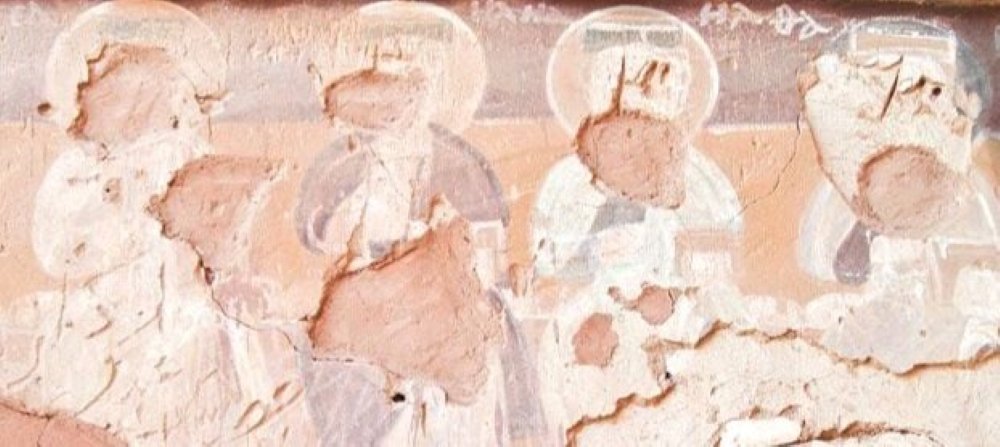
According to the old priest, the Presbyters were named by Christ himself (the Lamb), and each of their names starts with one of the twenty-four letters of the Greek alphabet. A Coptic liturgical Ode to the Twenty-Four Presbyters, preserved in later 14th-century manuscripts (Cairo, no. 92 I and 93), further claims that it is John the Evangelist who “heard the Lamb reciting their names from the first, the alpha, to the last, the omega”. This idea is relatively ancient, as it is attested, for example, in the work of bishop Andrew of Caesarea, writing in Greek at the end of the 6th or beginning of the 7th century (Commentary on the Apocalypse, 4.10). There were several alphabetical lists of names for the Twenty-Four Presbyters, with the simplest form created by adding the ending “-aēl” to each of the twenty-four Greek letters (Aaēl, Baēl, Gaēl, Daēl, etc.). These names were sometimes used as legends in wall paintings from Egypt, for example, in one representation of the Presbyters from the church of the Monastery of St. Simeon in Aswan.
Another passage of Pseudo-Cyril’s On the Honour of the Twenty-Four Presbyters may explain why the Presbyters, and in particular their names, became popular in Coptic magical texts:
And after he (the old priest) told me (Cyril) these great, wonderful names one by one, he turned to me and said to me: “These such names must not be pronounced, for the Lamb revealed them, but they will be a phylactery for everyone who is sick with various diseases, and the Lord will grant them healing.”
(IB 13.40 recto = MONB.DC, p. 15)
The work attributed to Cyril therefore describes a magical practice: writing down the names of the Twenty-Four Presbyters on some support, for example, a piece of papyrus or parchment, and using it as an amulet for healing diseases. This specific practice is also attested in magical texts from Late Antique and Early Islamic Egypt.
In Coptic magic, the Twenty-Four Presbyters appear in nineteen different magical texts dated between the 4th and 11th centuries, most of which are amulets or prayer texts for healing and protection. Some texts only mention them briefly as a group, among other angels invoked to accomplish various requests. For example, the charm for a good singing voice P. CtYBR inv. 1791 (8th century; PCM I 17) features a series of salutations to various groups of angels, such as the archangels, powers, principalities, authorities, the cherubim and seraphim, and the Twenty-Four Presbyters. Other texts include more elaborate physical descriptions, which often draw upon that from Revelation. For example, in the healing prayer from the manuscript Berlin P. 11347 (10th–11th centuries), the Presbyters are described as “those who sit upon twenty-four thrones, with twenty-four crowns upon their heads, and twenty-four censers in their hands”.
Most significantly, several Coptic magical texts provide lists of names for the Twenty-Four Presbyters. This is not surprising, considering the importance in ancient magical practices of knowing the true names of the celestial beings invoked. Two main lists were used in Coptic magic. The first corresponds to the alphabetical names from the work attributed to Cyril of Jerusalem and appears in five magical texts: the amulets Berlin P. 8330 (7th–8th centuries) and Vienna Nationalbibliothek K 07090 (10th century), a charm for favour in the formulary British Library MS Or 5899.1 (10th century), the healing prayer of Berlin P. 11347 mentioned above, and one version of the prayer for healing and protection known as the Endoxon of the Archangel Michael, in Collège de France 2 (11th century).
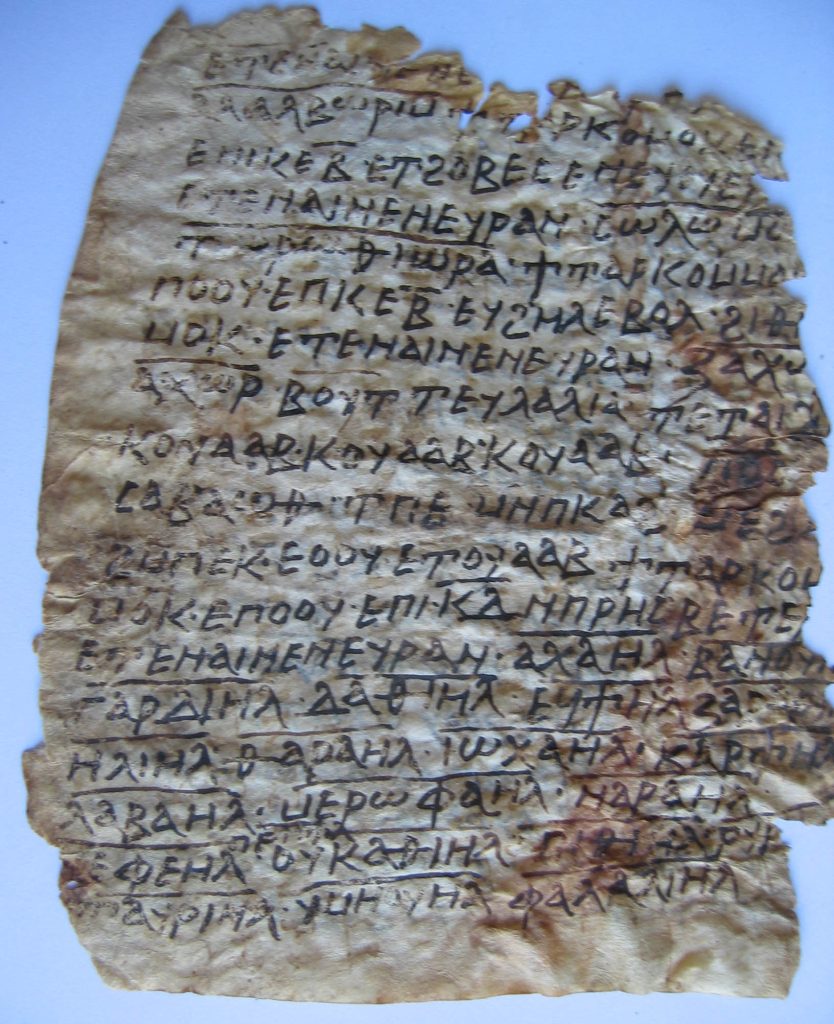
I adjure you today, by these Twenty-Four Presbyters, whose names are Achaēl, Banouēl, Gardiēl, Dathiēl, Eftiēl, Zardiēl, Ēliēl, Tharaēl, Iōchaēl, Kartiēl, Labaēl Merōphaēl Naraēl Xepheēl Oukathiēl Pithiēl Ryraēl Tauriēl Umnēouēl Phalaliēl [Chresto]uēl Psalaphiēl Ōlithiēl.
(Collège de France 2, p. 11 l. 11 – p. 12 l. 2)
The second list is the so-called Beth-Betha logos, whose names show greater variation than the alphabetical list, but always start with Bēth Bētha (and sometimes Bēthai). While shorter versions of the logos could refer to other celestial beings (for example, the so-called “Nine Guardians”), sequences with twenty-four names appear for the Twenty-Four Presbyters in five additional Coptic magical texts: the healing amulet for a pregnant woman preserved in British Library MS Or 5525 (9th–11th centuries), as well as four versions of the prayer for healing and protection known as the Prayer of Mary at Bartos, in the manuscripts Coptic Museum 4958 (5th–9th centuries), British Library MS Or 6796.1–3 (6th–7th centuries), P. Iand. Inv. 9 A–B (8th century), and P. Heid. Inv. Kopt. 685 (10th century; PCM I 25).
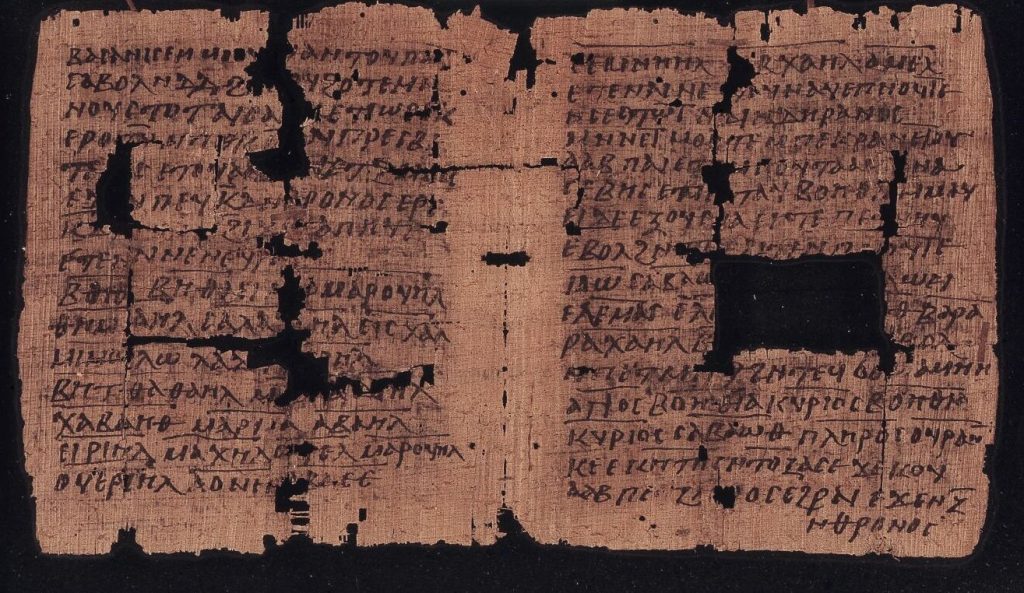
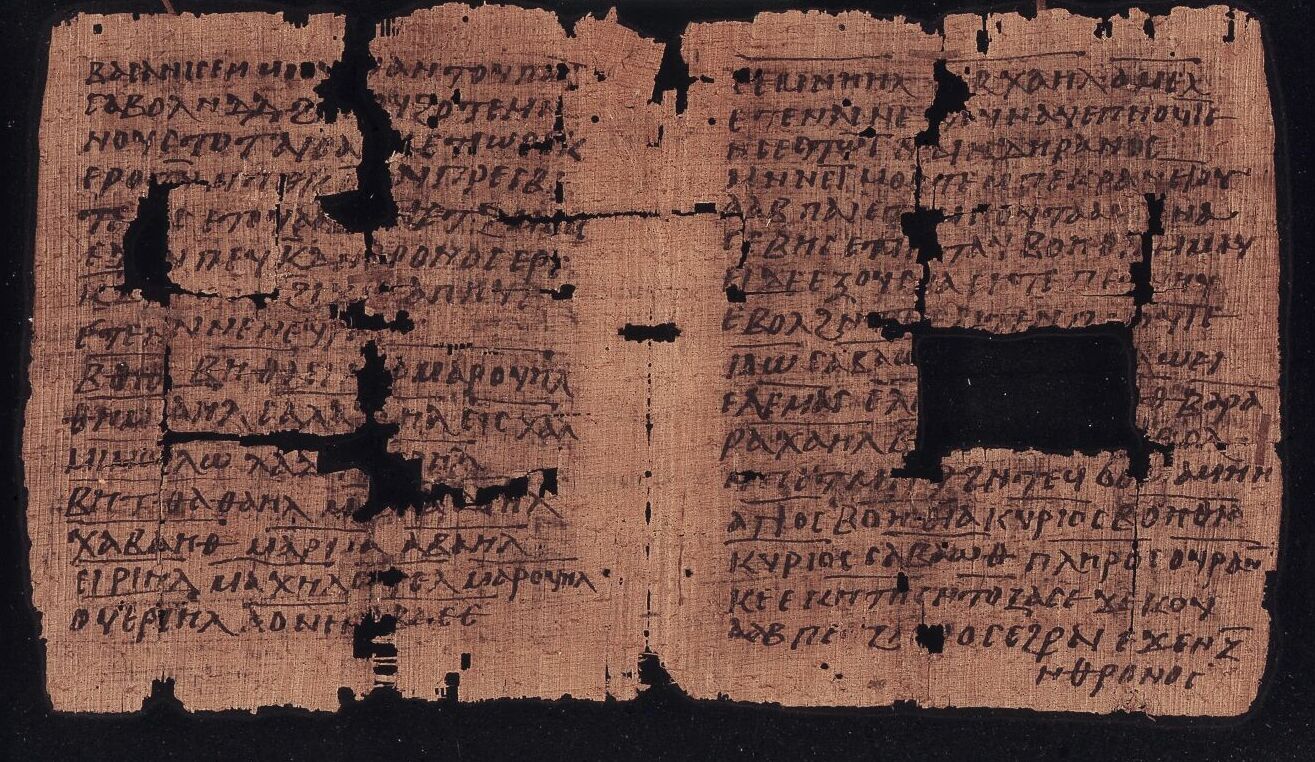
I adjure you by the Twenty-Four Holy Presbyters, those who sit upon their twenty-four thrones, with twenty-four crowns upon their heads, whose names are Bēth, Bēthaei, Marmarouēl, Thēmaēl, Salatēl, Eischal, Mimōlō, Lad[…], […]rēl, Bētthathaēl, M[…]adiēl, Chabaēth, Marma, Abaēl, Eiriēl, Machēl, Ōrēl, Marouēl, Oueriēl, Aonē, Abaee, Semnēēl, Abchaēl, Amel.
(P. Iand. Inv. 9 A–B, p. 2–3)
Finally, while most of the Coptic magical texts referred to above have apotropaic goals such as healing and protection, these are not the only situations in which one could invoke the Twenty-Four Presbyters. In some cases, they also appear in more aggressive spells, such as the applied curse of Bodleian MS. Copt. c (P) 4 (4th–5th century), in which Jacob appeals to several celestial beings, including the ‘Twenty-Four Presbyters who sit in the presence of the Father’, to gain vengeance against Maria, Tatore, and Andreas.
In other cases, the Presbyters are mentioned in ritual prescriptions. For example, the formulary BM EA 10391 (8th–9th centuries) contains several short invocations and prayers, all followed by a series of instructions on how to use them. For one of these prayers, eight prescriptions instruct the ritualists to write down the names of the Twenty-Four Presbyters, for goals such as gaining favour, cursing, and causing separation and destruction. As the names themselves are not provided in the prescriptions, the ritualists were likely expected to know them.
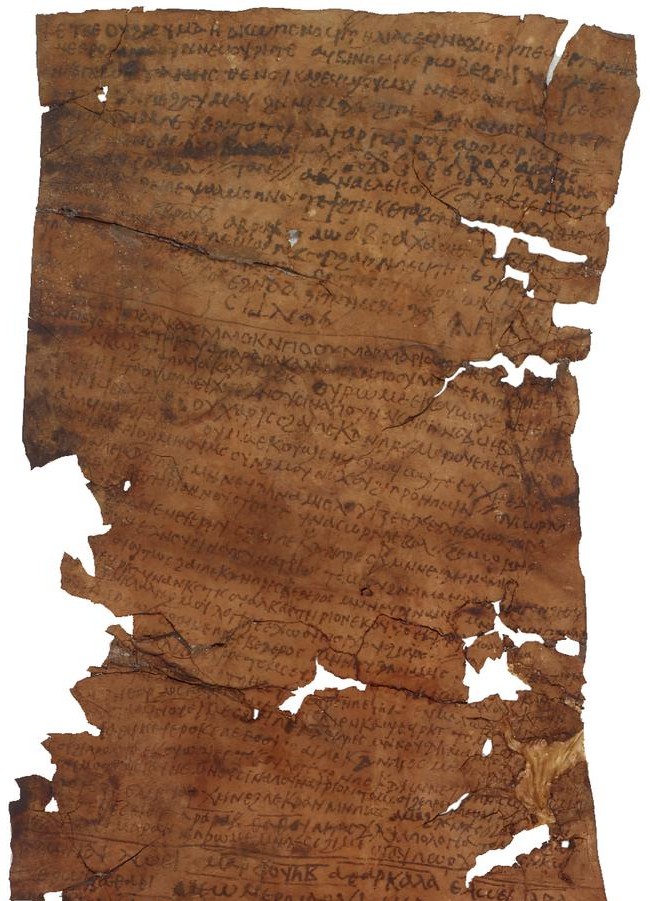
… Friends whom you wish to divide against each other: write (the names of) the Twenty-Four Presbyters with their powers, contemplate the prayer over wild mustard, bury them in the place where they pass by …
(BM EA 10391, ll. 82–84)
In sum, whether they were invoked for healing and protection, as prescribed in the homily attributed to Cyril of Jerusalem, or for more aggressive purposes, it seems that the most important thing was to know the names of the Twenty-Four Presbyters. Due to their holy origin, and for increased magical efficacy, it was also better to write them down, rather than speak them aloud. And while there was variety in the names used in Coptic magical texts, some lists and naming conventions, as well as the physical descriptions of the angels with their thrones and crowns, were shared across literary genres and iconography, showing that magical practices were not isolated from wider traditions about the Twenty-Four Presbyters.
Bibliography and Further Readings
Campagnano, A., A. Maresca, and T. Orlandi. Quattro omelie copte. Milan, 1977.
Pages 45–104 for editions and translations of the Coptic homilies on the Twenty-Four Presbyters.
Evelyn White, H.G. The Monasteries of the Wadi ‘n Natrûn. Part 1: New Coptic Texts from the Monastery of Saint Macarius. New York, 1926. URL
Page 226 for the manuscripts with the Ode to the Twenty-Four Presbyters.
Grosjean, P. “Les vingt-quatre vieillards de l’Apocalypse. À propos d’une liste galloise”, Analecta Bollandiana 72 (1954): 192–212. URL
Kropp, A. Der Lobpreis Des Erzengels Michael (Vormals P. Heidelberg Inv. Nr. 1686). Brussels, 1966.
Edition and German translation of P. Iand. Inv. 9 A–B.
Łajtar, A. and J. van der Vliet. Empowering the Dead in Christian Nubia: The Texts from a Medieval Funerary Complex in Dongola. Warsaw, 2017. URL
Pages 180–90 for a discussion of the names of the Twenty-Four Presbyters.
Meinardus, O.F.A. “The Twenty-four Elders of the Apocalypse in the Iconography of the Coptic Church”, Studia Orientalia Christiana, Collectanea 13 (1968): 141–57. URL
Mihálykó, Á.T. “Mary, Michael and the Twenty-Four Elders: Saints and Angels in Christian Liturgical and Magical Texts.” In Proceedings of the 29th International Congress of Papyrology. Lecce, 28 July-3 August 2019, ed. by M. Capasso, P. Davoli, and N. Pellé. Lecce, 2022, 722-773. URL
Viaud, G. “Les 24 Presbytres de l’Apocalypse dans la tradition copte”, Bulletin de la Société d’archéologie copte 29 (1990): 123–45.
Zellmann-Rohrer, M. “Catalogue: Hay 1–7.” In The Hay Archive of Coptic Spells on Leather: A Multidisciplinary Approach to the Materiality of Magical Practice, ed. by E.R O’Connell.London, 2023, 78–178. URL
Pages 79–100 for the edition of BM EA 10391 (Hay 1).